
GPT-6 Sol and Luna brought lower-cost coding and agentic work to the GPT-6 family. GPT-6.1 Sol closes more of the gap with Astra: OpenAI reports gains in debugging, reading complex documents, and completing multi-step business workflows, at the same standard input and output token prices as GPT-6 Sol.
For TextQL, those are useful capabilities because analysis takes more than one query. Ana may need to inspect schemas, write SQL, check unexpected results, and revise the analysis before producing a chart.
What our benchmark shows
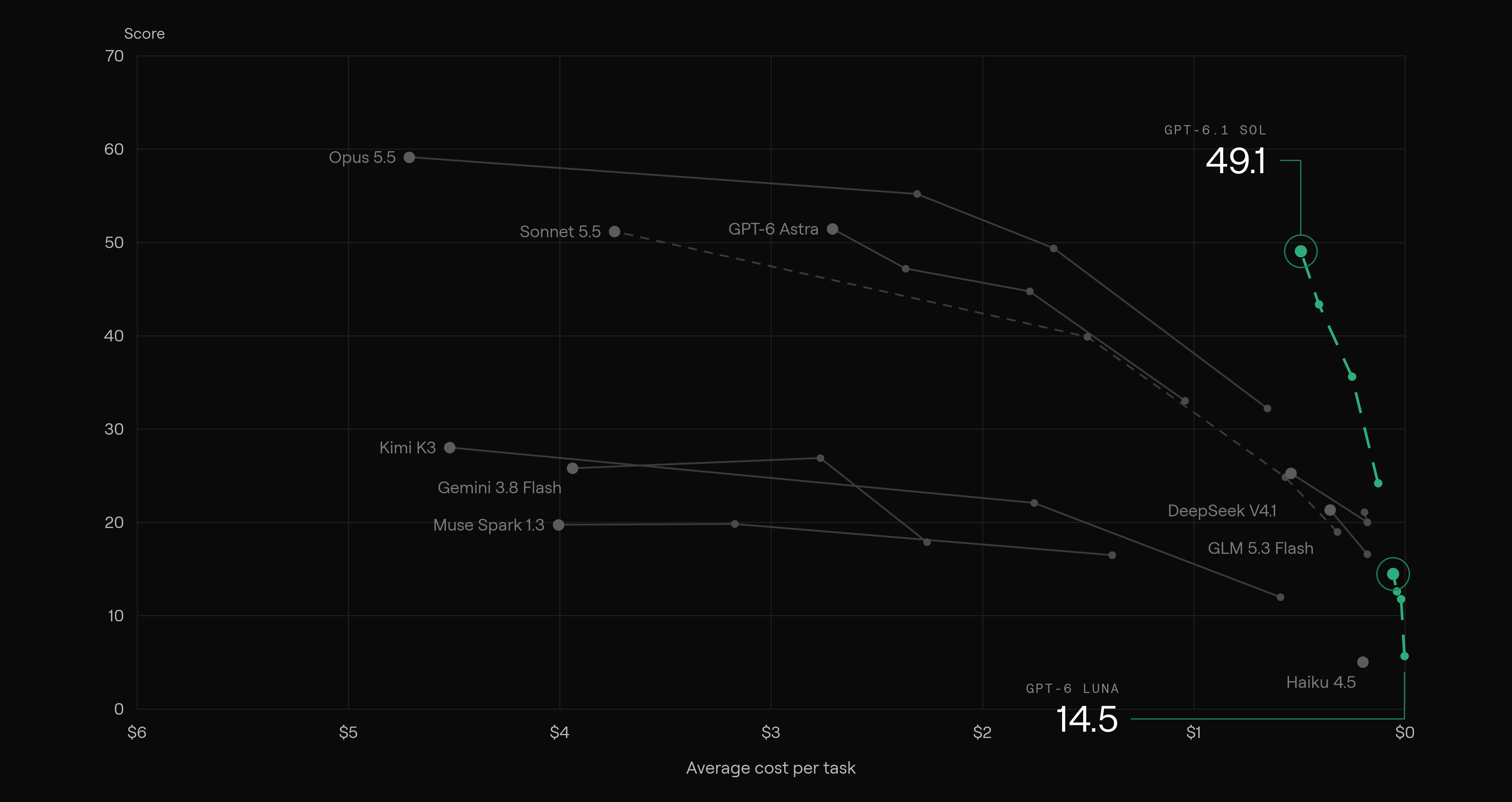
In our internal benchmarks, GPT-6.1 Sol scores 49.1 at its highest effort setting, up 12.6 points from the 36.5 scored by GPT-6 Sol. It also costs less than its predecessor, about $0.49 per task compared with $0.85. GPT-6 Astra still scores higher at 51.5, but it costs about $2.71 per task. On this benchmark, GPT-6.1 Sol delivers about 95% of Astra's score at under a fifth of the cost.
GPT-6 Luna sits at the other end of the range, scoring 14.5 for under 6 cents per task. That makes Luna a fit for simple, high-volume work where cost matters more than depth.
Our take: start with GPT-6.1 Sol for analysis that takes several queries and revisions. Try Luna for narrow, repeatable tasks, such as classifying records or summarizing a known query result. Keep Astra for the hardest investigations, where a missed relationship or incorrect assumption costs more than the model call.
Enabling Access
Go to Settings > Models and enable GPT-6.1 Sol, GPT-6 Sol, or GPT-6 Luna for your organization. Then open a new thread and select it from the model picker.
Full model configuration options are in our documentation.