Enterprise data agents that identify high-risk patients
The healthcare industry generates more data per patient than any other sector—electronic health records, claims databases, lab results, pharmacy records, wearable device data. Yet when a care coordinator needs to identify which diabetic patients haven't had an A1C test in six months, it can take weeks to get an answer.
The problem isn't data availability. It's data accessibility.
Healthcare organizations are drowning in systems that don't talk to each other: Epic for clinical data, Cerner for hospital systems, claims databases from multiple payors, pharmacy benefit managers, social determinants of health platforms. Each system has its own data model, its own access patterns, its own definition of what "patient" means.
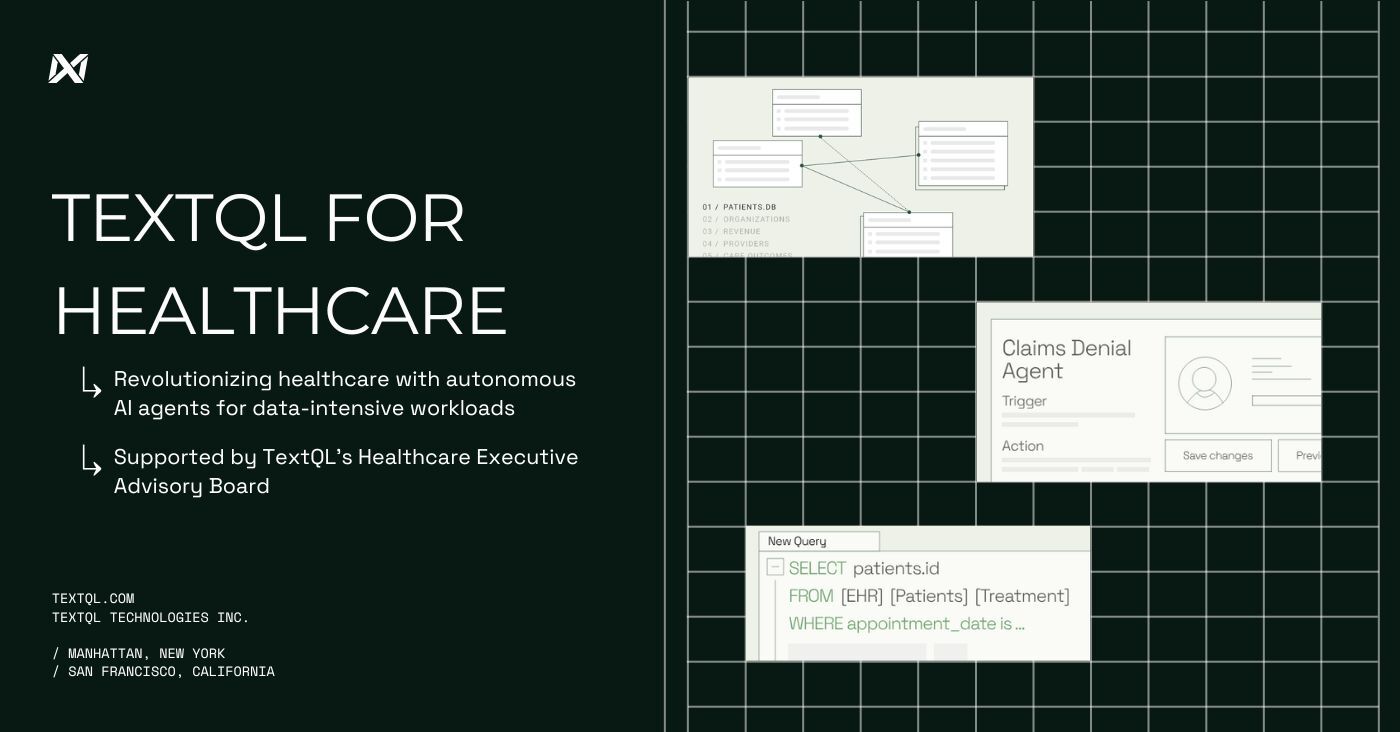
Today, we're launching TextQL for Healthcare—enterprise data agents purpose-built to turn this fragmented data landscape into actionable intelligence for payors, providers, and health systems.
The Healthcare Data Problem
Healthcare data teams face unique challenges that make traditional analytics tools inadequate:
Fragmented data sources: A single patient's data might live across Epic's EHR system, claims databases using NCPDP standards, HL7 FHIR APIs, and proprietary pharmacy systems. Each speaks a different language.
Regulatory complexity: HIPAA compliance isn't optional. Every query, every data access, every analysis needs audit trails and role-based access controls that actually work.
Clinical urgency: When a population health team needs to identify high-risk patients for intervention programs, waiting three weeks for a data request isn't just inefficient—it's lives at stake.
Semantic chaos: Is "patient" the same as "member"? Does "diabetic" mean type 1, type 2, or both? What's the difference between a "claim" and an "encounter"? Every organization defines these differently.
Traditional BI tools force healthcare teams to pick: either build a massive data warehouse that attempts to unify everything (six-month projects that are outdated before they launch), or accept fragmented point solutions that can't answer cross-system questions.
TextQL's approach is different.
Three Types of Agents for Healthcare
We've built three specialized agent types that work together to handle the full spectrum of healthcare data challenges:
1. Integration Agents
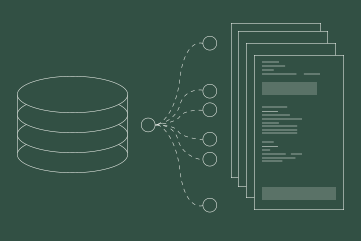
Integration agents connect to healthcare data sources and translate between different data models in real-time.
When you ask "show me diabetic patients with A1C over 8.5," the integration agent:
- Queries your Epic EHR for clinical diagnoses and lab results
- Pulls claims data from your adjudication system to verify continuous coverage
- Cross-references pharmacy data to check medication adherence
- Returns unified results with lineage tracking showing exactly where each data point came from
No ETL pipelines. No waiting for overnight batch jobs. Just real-time queries across systems that were never designed to work together.
2. Analytics Agents
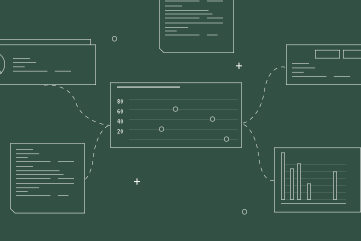
Analytics agents answer business questions by conducting multi-step investigations across your healthcare data.
Ask "which patients are at highest risk for readmission in the next 30 days?" and watch the analytics agent:
- Pull historical admission data to identify patterns
- Run statistical analysis on comorbidities and social determinants
- Calculate risk scores using validated clinical models
- Segment populations by intervention type
- Generate a report with specific patient lists and recommended actions
These aren't simple SQL queries. They're full analytical workflows that combine data pulls, statistical tests, and clinical domain knowledge.
3. Reconciliation Agents
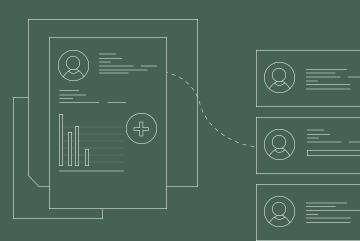
Reconciliation agents identify and resolve data quality issues across fragmented healthcare systems.
The agent automatically:
- Detects duplicate patient records across systems
- Flags inconsistencies in clinical coding (why does Epic say this patient has diabetes but claims data shows no prescriptions?)
- Identifies missing data that impacts quality measures
- Suggests corrections with confidence scores
One customer found 47,000 missing A1C tests in their diabetic population—not because the tests weren't done, but because data from their lab system wasn't making it into the warehouse.
The Technical Stack
Building agents for healthcare required solving three hard technical problems:
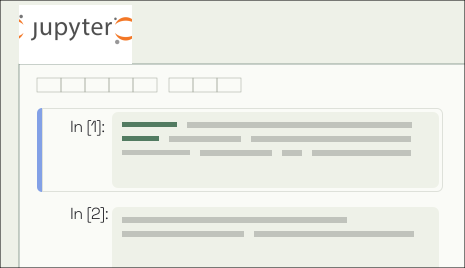
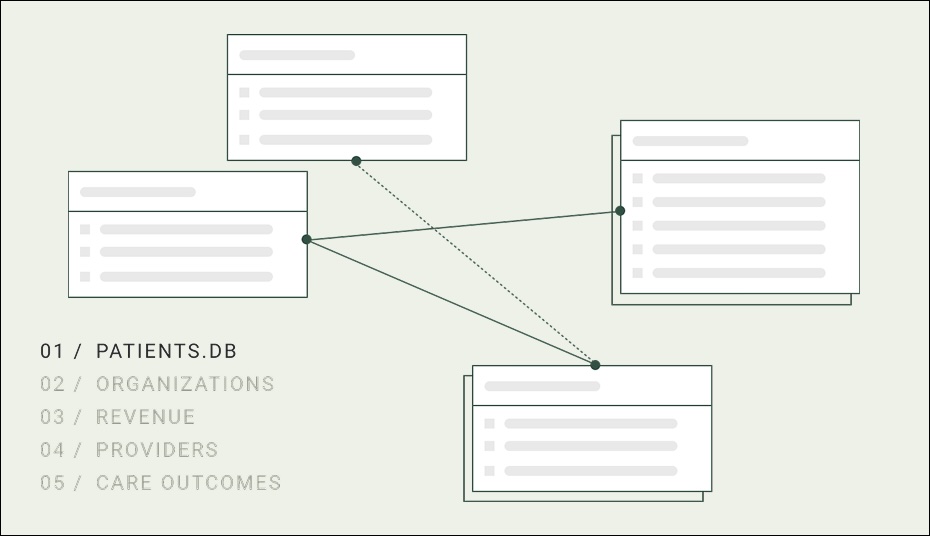
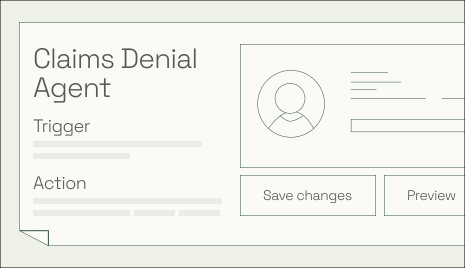
Secure Execution Environment
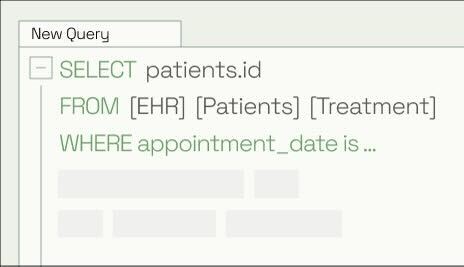
Healthcare data can't leave your network. TextQL agents run in your VPC, with all LLM calls through Azure OpenAI or AWS Bedrock using your own keys. We never see PHI. We never store queries. We definitely never train models on patient data.
Role-based access control at the agent level means your finance team can analyze claims trends without accessing clinical diagnoses. Your care coordinators can see patient risk scores without viewing full medical records.
SOC 2 Type II certified, HIPAA compliant, BAA available. The security architecture is built for healthcare from day one, not bolted on later.
Healthcare Semantic Ontology
The reason most AI tools fail in healthcare is they don't understand healthcare data models. An ICD-10 code isn't just a string—it has hierarchical relationships, clinical significance, and billing implications.
We built a healthcare-specific semantic layer that understands:
- Clinical coding systems: ICD-10, CPT, HCPCS, NDC, LOINC
- Healthcare data standards: HL7 FHIR, X12 EDI, NCPDP
- Common data models: OMOP, Sentinel, PCORnet
- EHR systems: Epic Clarity, Cerner Millennium, Allscripts
When you ask about "diabetic patients," the agent knows to check for both ICD-10 codes (E11.*) and medication fills (insulin, metformin) and lab results (A1C tests). It understands that a patient on Medicare Advantage needs different attribution logic than a commercial member.
This ontology is what lets non-technical users ask questions in business language and get clinically accurate answers.
Self-Configuring Agents
Every healthcare organization has a different data structure. Epic implementations vary wildly. Claims databases use different schemas. Custom fields are everywhere.
TextQL agents configure themselves by:
- Scanning your database schema and documentation
- Learning from existing queries and dashboards
- Building an internal knowledge graph of table relationships
- Adapting query patterns based on feedback
The first time someone asks about "readmissions," the agent might take 30 seconds to explore your data model. By the tenth query, it's sub-second because it's learned where readmission data lives and how it's structured in your specific environment.
Lumeris and TextQL Partnering to Transform Care Management
TextQL Healthcare and Lumeris have partnered to bring AI-powered analytics directly into care management workflows, fundamentally changing how health systems access and act on population health data. The partnership connects TextQL's platform to Lumeris' extensive data infrastructure – enabling autonomous AI agents to query complex datasets and delivering discrete and actionable intelligence to care teams without the need for SQL or traditional reporting tools.
By eliminating the technical barriers between clinical teams and their data, the partnership demonstrates how AI agents can scale value-based care operations while reducing administrative burden – a critical capability as healthcare organizations manage increasingly complex patient populations and quality requirements. The collaboration positions both companies at the forefront of healthcare's shift toward data-driven, proactive care management.
"As we scale Tom™, speed and accuracy in data analytics continues to increase in criticality. TextQL enables analytics work across our clinical and business teams to merge a multitude of data sources, analyze population health trends, and extract actionable insights in real-time. This directly translates to major operational efficiencies and productivity improvements."
— Harigovind Singh, Senior Vice President of Engineering, Lumeris
Healthcare Executive Advisory Board
 Varsha Rao
Former CEO of Nurx, COO of Clover Health. Airbnb Head of Global Operations and Exec Team Member
 David Griffith
Managing Director, Trinity Life Sciences. Deep pharma and payor experience (Deerfield Management, Pfizer)
 Jean-Claude Saghbini
Chief Technology Officer & President, Lumeris Technology. Driving Tom™ - AI-powered Primary Care as a Service platform
 Raghu Chandra
30-year enterprise technology veteran (Cognizant, Capgemini). Built large-scale EHR platforms and cloud transformation businesses
 Sam Mohanty
Head of AI Innovation, Towerbrook-owned women's wellness company. Former Chief Data Officer, Prime Therapeutics (one of the largest PBMs)
These aren't advisors who show up for quarterly calls. They're operators who've run the systems TextQL is now optimizing.
Compliance and Security


Healthcare data protection isn't a feature—it's the foundation. TextQL's compliance architecture includes:
SOC 2 Type II Certification: Independent audit of security controls for availability, confidentiality, and privacy. Full audit reports available under NDA.
HIPAA Compliance: Business Associate Agreement (BAA) available. All systems designed for PHI handling with encryption at rest and in transit, audit logging, and breach notification procedures.
GDPR Ready: For health systems operating in Europe. Data residency controls, right to be forgotten, data processing agreements.
Role-Based Access Control (RBAC): Granular permissions at the data source, schema, table, and column level. Care coordinators see different data than billing analysts.
Audit Trails: Every query logged with user identity, timestamp, data accessed, and results returned. Full compliance with HIPAA's minimum necessary standard.
VPC Deployment: Agents run in your infrastructure. Patient data never leaves your network. LLM calls use your Azure OpenAI or AWS Bedrock instances.
Data Lineage: Every insight includes full provenance—which tables, which columns, which filters. Traceability for quality audits and regulatory reviews.
Security isn't negotiable in healthcare. We built for it from day one.
Integration Capabilities
TextQL connects to the systems healthcare organizations actually use:
Electronic Health Records:
- Epic (Clarity, Caboodle, FHIR APIs)
- Cerner (Millennium, HealtheIntent)
- AllScripts
- Athenahealth
Claims & Adjudication:
- Facets (TriZetto)
- QNXT
- HealthEdge HealthRules
- Custom adjudication systems
Data Warehouses:
- Snowflake
- Google BigQuery
- Amazon Redshift
- Azure Synapse
- Databricks
Semantic Layers:
- dbt Semantic Layer
- Cube
- Looker
- AtScale
BI & Visualization:
- Tableau
- Power BI
- Qlik
- ThoughtSpot
Health Information Exchanges:
- HL7 FHIR APIs
- Carequality
- CommonWell
Pharmacy Systems:
- SureScripts
- NCPDP networks
- PBM platforms
The power isn't just connecting to these systems—it's making them work together. When a payor needs to reconcile clinical diagnoses from Epic with claims submissions and pharmacy fills, TextQL handles the translation layer automatically.
Use Cases
For Payors:
- Risk adjustment: Identify undocumented conditions affecting HCC scores
- Star Ratings: Monitor gaps in care for HEDIS measures in real-time
- Medical cost management: Detect utilization patterns driving trend
- Fraud detection: Anomaly analysis across claims, providers, and members
- Network optimization: Analyze provider performance and cost efficiency
For Providers:
- Quality reporting: Automate MIPS and value-based care metrics
- Population health: Identify high-risk patients for care management
- Operational analytics: Track throughput, length of stay, readmissions
- Revenue cycle: Analyze denials, coding accuracy, reimbursement
- Clinical research: Cohort identification for studies and trials
For Health Systems:
- Care coordination: Cross-facility patient tracking and handoffs
- Resource planning: Predictive modeling for capacity management
- Clinical variation: Identify practice pattern differences across sites
- Social determinants: Integrate SDOH data with clinical outcomes
- Value-based contracts: Track performance against ACO and bundled payment metrics
These aren't hypothetical. These are the questions our healthcare customers are asking right now.
Getting Started
We're doing two-week proof of concepts with healthcare organizations. We'll connect to your Epic EHR, your claims database, your data warehouse—whatever systems you have. Your team asks real questions. The agents either deliver answers or they don't.
No six-month implementations. No consulting fees for configuration. No promises that it'll work better after we tune it for another quarter.
Here's what the POC includes:
- Integration with 2-3 of your primary data sources
- Configuration of healthcare-specific ontology for your data model
- Training sessions for your data team and business users
- Full HIPAA-compliant environment in your VPC
- Access to all three agent types (Integration, Analytics, Reconciliation)
If TextQL saves your team 20+ hours per week in the first two weeks, we talk about a contract. If it doesn't, you've lost nothing but a couple of integration meetings.
Request a demo at textql.com/request-demo.
We'll Be at HLTH 2025

We're attending HLTH Conference in Las Vegas, May 12-15, 2025. If you're working on healthcare analytics, value-based care, or population health, let's meet.
We're not doing booth theater. We'll connect to your actual data (in a HIPAA-compliant environment) and run live queries during the meeting. Bring your hardest questions.
Schedule time with us at the conference: textql.com/hlth2025
Healthcare data is too important to be trapped in systems. The organizations that win in value-based care will be the ones that can actually use their data to identify risk, close gaps in care, and improve outcomes. The question is whether you want to keep waiting three weeks for every analysis, or skip straight to getting answers.
We built TextQL for Healthcare because the existing tools weren't designed for healthcare's complexity—they were enterprise software adapted for healthcare. We started from healthcare and built out.
If you're responsible for healthcare analytics and you're tired of being the bottleneck between data and the people who need it, let's talk.