

Dropbox FP&A gets insights 140× faster with TextQL
Ana unified Dropbox's P&L across Databricks, Oracle, Tableau, and Excel so the FP&A team could bring one number to the CFO, not four.

400 hrs
manual reconciliation saved per quarter
140×
faster delivery per FP&A question
98.8%
reduction in dashboard build time
“We looked at a number of different solutions. We found TextQL to be the best.”

Dropbox serves more than 700 million users. But inside the company, its FP&A team was serving a much harder customer: a CFO who needed to know, with confidence, what each number meant the moment it hit his desk.
The data underneath the business was the problem: spread across an ERP, a warehouse, a BI tool, and a dozen FP&A models that had never agreed on the same definition of “revenue” in their lives. Every month, the same metric pulled from four systems returned four different answers. The rest of the company called this “data quality.” The FP&A team called it their job.
Adam Richter runs revenue finance at Dropbox. Every week, his team tells leadership what the business actually did, and whether it did it at a margin worth defending. At a company with millions of subscription transactions, three databases, and a finance stack that had evolved faster than anyone’s ability to document it, that job had quietly become impossible.
“We looked at a number of different solutions,” Adam said. Most of them were some flavor of the same pitch: move your data into our platform, clean it, re-model it, and then we’ll build you a BI experience on top. A year-long migration, a six-figure services bill, and a promise that the numbers would be right on the other side. Dropbox didn’t have a year. And the numbers being wrong wasn’t a year-long problem. It was a Tuesday problem.
Four systems. Four answers. One quarter-end.
Reconciling four numbers by hand took days. Explaining the variance to the CFO took nerve.
Same metric. Four systems. Four answers.
Q3 SUBSCRIPTION REVENUE — AS REPORTED BY EACH TOOL
ERP

Oracle
$47.2M
FP&A ANALYST
?
which number?
DATA WAREHOUSE

$46.8M
FP&A MODEL

Microsoft Excel
$47.9M
BOARD DASHBOARD

$47.5M
"garbage in, garbage out." — every FP&A leader, every week
FIG. 01 — BEFORE TEXTQL
Every Monday morning, someone on the FP&A team would start the week the same way: pulling “Q3 Subscription Revenue” out of Oracle, out of Databricks, out of the FP&A Excel model, and out of the board-facing Tableau dashboard. The four queries would return four numbers. The four numbers would disagree. Not by rounding. By millions.
The cause is never one thing. FP&A teams at large companies often find themselves in situations like this: the ERP books billings on contract signature, while the warehouse recognizes revenue on delivery. A rolling smoothing the board asked for three years ago is still baked into the Excel model, and no one has the authority to turn it off. The board-facing BI dashboard pulls from a view that was built by an analyst who has since left the company. Each answer is defensible in isolation. None of them match. Dropbox’s FP&A team lived in some version of this reality, the same way most FP&A teams at scale do.
So the FP&A team reconciled by hand. A junior analyst would spend two days a week chasing down the delta. A senior analyst would spend half a day QA’ing their work. The Director of Revenue would spend another hour on Friday afternoon deciding which of the four numbers to actually bring to the CFO, and writing a footnote explaining why the other three were wrong. That footnote was the job. The analysis was a rounding error next to it.
Every off-the-cuff leadership question (say, “what’s driving the slowdown in free-trial conversion?”) kicked off a week-long back-and-forth with the Tableau team. The FP&A team lived in the gap between systems, and the gap was getting wider every quarter.
The numbers above are illustrative, but the shape of the problem is exact. A single reporting cycle at Dropbox’s scale touches roughly a hundred of these reconciliations. Each one is a small decision about which system is right, which one is stale, and which one no one remembers configuring. Multiply that by every P&L line, every segment cut, every board-deck appendix, every ad-hoc ask from the CEO. The real cost of fragmented data stops being a data-engineering problem and becomes a trust problem. A team that spends its week reconciling numbers doesn’t have the bandwidth to challenge them.
That’s what the phrase “garbage in, garbage out” was actually describing when Adam’s team heard it in hallways. It was really a comment on the output, and by extension, on the team producing it. The FP&A team needed a way to stop being the human reconciliation layer between four systems that were never going to agree on their own.
“We’ve never had a full look at our P&L until leveraging TextQL’s multi-source capabilities.”
Multi-source agentic execution with Ana
TextQL connected Ana directly to Dropbox’s financial systems of record. No migration. No warehouse rebuild.
The thesis behind Ana is simple. Most AI tools are trained to give one answer when the underlying systems give four, and to give it with confidence. FP&A teams see through that immediately. What they need is an agent that understands the problem the way a senior analyst does: there are four answers, here’s why each one exists, here’s which one to bring to the CFO, and here’s the audit trail that defends the choice.
Ana reasons across the mess the way the best human analyst does. FP&A asks a question once, in natural language. Ana queries every connected system simultaneously: Databricks for usage, Oracle for billings, Tableau for the board’s definition, Slack for the context of who last changed what. It reconciles the answer in-flight. Every row is traceable. Every definition is editable. Every number comes with the confidence score Adam needs to defend it.
The setup was a connector flow. Dropbox’s data team pointed Ana at their existing warehouses, their existing BI tool, and their existing ERP. Ana read the schemas, learned the Dropbox-specific definitions (ARR vs. billings vs. recognized revenue, which smoothing the board prefers, which segment cuts matter to the revenue team and which matter to the product team), and was in production in under a week. No data left Dropbox’s environment. No pipeline was rebuilt. The FP&A team’s existing tools still worked the day Ana went live. They just stopped disagreeing.
-
One question, every system
FP&A asks in natural language. Ana queries Databricks, Oracle, Tableau, and Slack simultaneously and reconciles the answer, with a traceable audit trail back to every underlying row.
-
A semantic layer that learns the business
Ana learns Dropbox-specific definitions (ARR vs. billings vs. recognized revenue) so every answer speaks the FP&A team’s language, not the database’s.
-
Confidence, not just output
Every number comes with a confidence score and the SQL, dashboard, or model cell it was derived from. Adam can defend it in front of the CFO without chasing sources.
-
Dashboards in minutes, not weeks
Any FP&A analyst builds a production-grade Tableau dashboard by describing it. No ticket to the BI team required.
The interaction model is unremarkable on purpose. An analyst types a question the way they’d ask a senior colleague. Ana answers with a number, a short explanation of how it was derived, a confidence score, and a link to the underlying rows for anyone who wants to dig. It’s a teammate who happens to be instant, never sleeps, and has already read every schema in the warehouse.
Mechanically, the reconciliation moved from the human to the agent. Culturally, the FP&A team stopped being the default scapegoat for every data disagreement. When Adam brings a number to the CFO now, the number comes pre-reconciled, pre-sourced, and pre-defended. The conversation gets to be about what the number means, not about whether the number is right.
That’s the part that doesn’t fit in a stat. Ana moved the FP&A team’s work up the stack, from reconciliation to analysis, from defending numbers to defending decisions. The hours saved matter, but the role that was freed up matters more.
One question. Every system.
ANA QUERIES EVERY SOURCE SIMULTANEOUSLY AND RECONCILES THE ANSWER
Oracle
Microsoft Excel

Why is Q3 subscription revenue $2.1M below forecast — and which segment and SKU is driving it?
ASKED BY ADAM · ANSWERED IN 6 SECONDS
FIG. 02 — AFTER TEXTQL
More clarity. More confidence. Four systems reconciled into one.
Six months into the Ana rollout, the FP&A team stopped tracking reconciliation time because there was nothing left to track. The weekly 400 hours of manual cross-system work, most of it senior analyst time, had collapsed to near-zero. The delta the team used to chase every Monday morning now resolved itself the moment Ana answered the first question of the week. The footnote explaining why the numbers disagreed stopped being written, because the numbers stopped disagreeing.
The speed gains are the headline stat, but the more honest measure is what the team now does with the time back. Ad-hoc CFO requests that used to sit in a queue for two weeks get answered the same day. Dashboards that used to take a week of Tableau-team back-and-forth now get built in 20 minutes by the analyst who needs them. The FP&A function went from a reporting bottleneck to a forward-looking advisory function inside of two quarters.
Quarterly impact
One source of truth for Dropbox FP&A
400 hrs
manual reconciliation saved per quarter
140×
faster delivery per FP&A question
98.8%
reduction in dashboard build time
Multi-Tool Integration Analyses per Month
*Real data
Automated business reporting
Ana delivers weekly automated breakdowns on customer retention, churn, and revenue forecasting. These cover long-term profitability, SKU analytics, source analysis for web and mobile, and free-trial conversion rates.
Dashboards in minutes, not days
Any member of the FP&A team can stand up a fully functional dashboard in 15 to 30 minutes. The same process previously took a week of back-and-forth with the Tableau team.
Off-the-cuff analytics
Ana provides on-demand responses to exploration, prediction, and root-cause inquiries, including ad-hoc requests that land directly from the Dropbox CEO and CFO.
Beyond FP&A
Dropbox is now extending Ana from FP&A into data science, accounting, and product management. Same agent, same data, new audience.
The expansion from FP&A into the rest of the company happened the way good platform rollouts are supposed to: organically. Accounting saw what revenue was doing with Ana and asked for access. Product saw what accounting was doing and asked for access. Data science, which had historically spent its time answering the same fifteen recurring questions for business teams, got most of that time back and moved up the stack to work Dropbox actually needed its data scientists working on. The number of people asking Ana questions at Dropbox grew by almost 3× every month through the first two quarters of rollout.
What Dropbox bought, in the end, was a decision: to stop paying the tax of fragmented data with human reconciliation time, and to stop treating that tax as inevitable. Every FP&A leader inherits the same problem. Most of them treat it as the cost of doing business. Dropbox stopped.
“When I take a number, I feel confident that I can bring it in front of a CFO and know it’s been vetted by TextQL.”
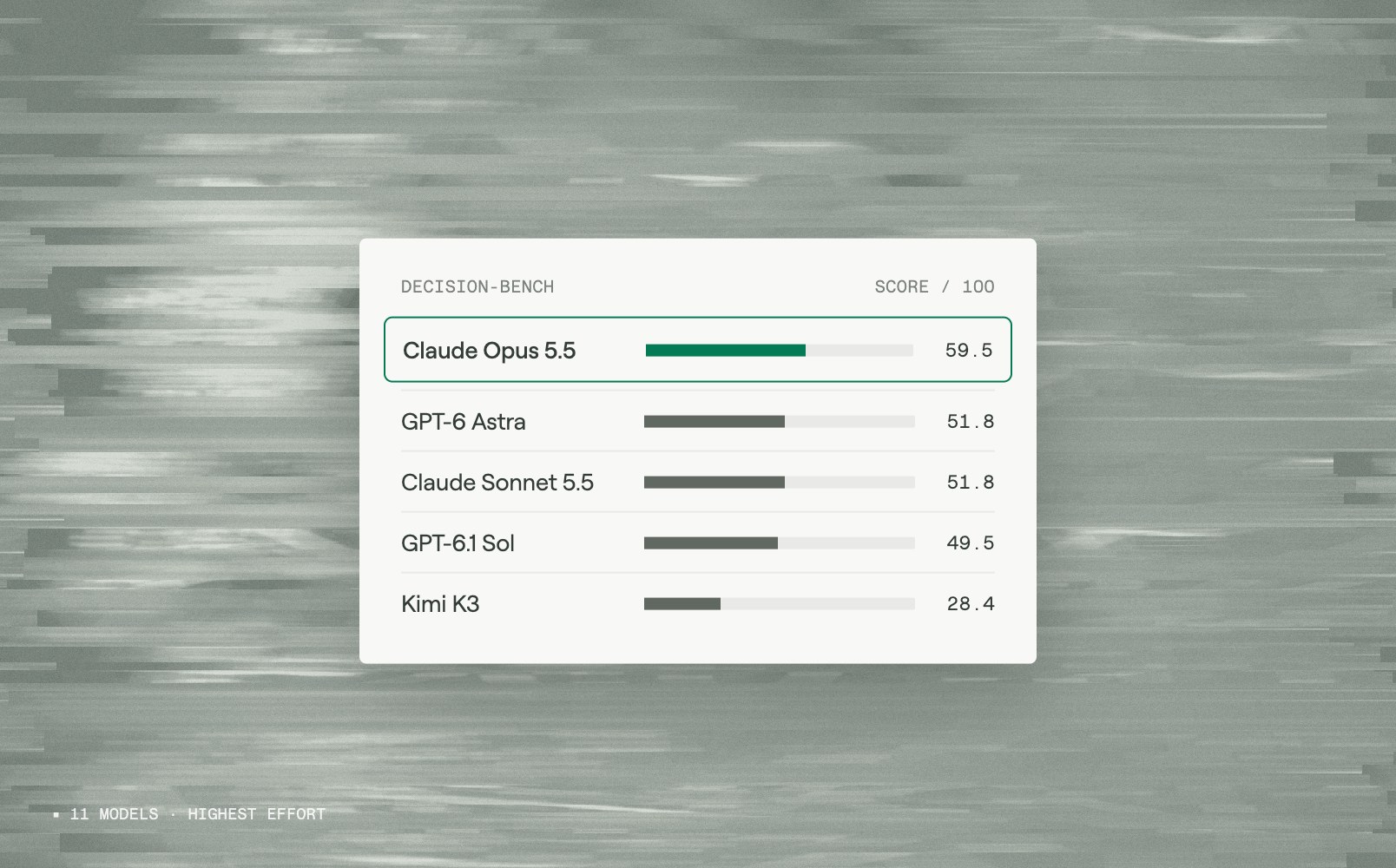
Decision-Bench: A Frontier Benchmark for Enterprise Decisions
The first evaluation framework for decision-making in complex enterprise environments, measured in dollars.
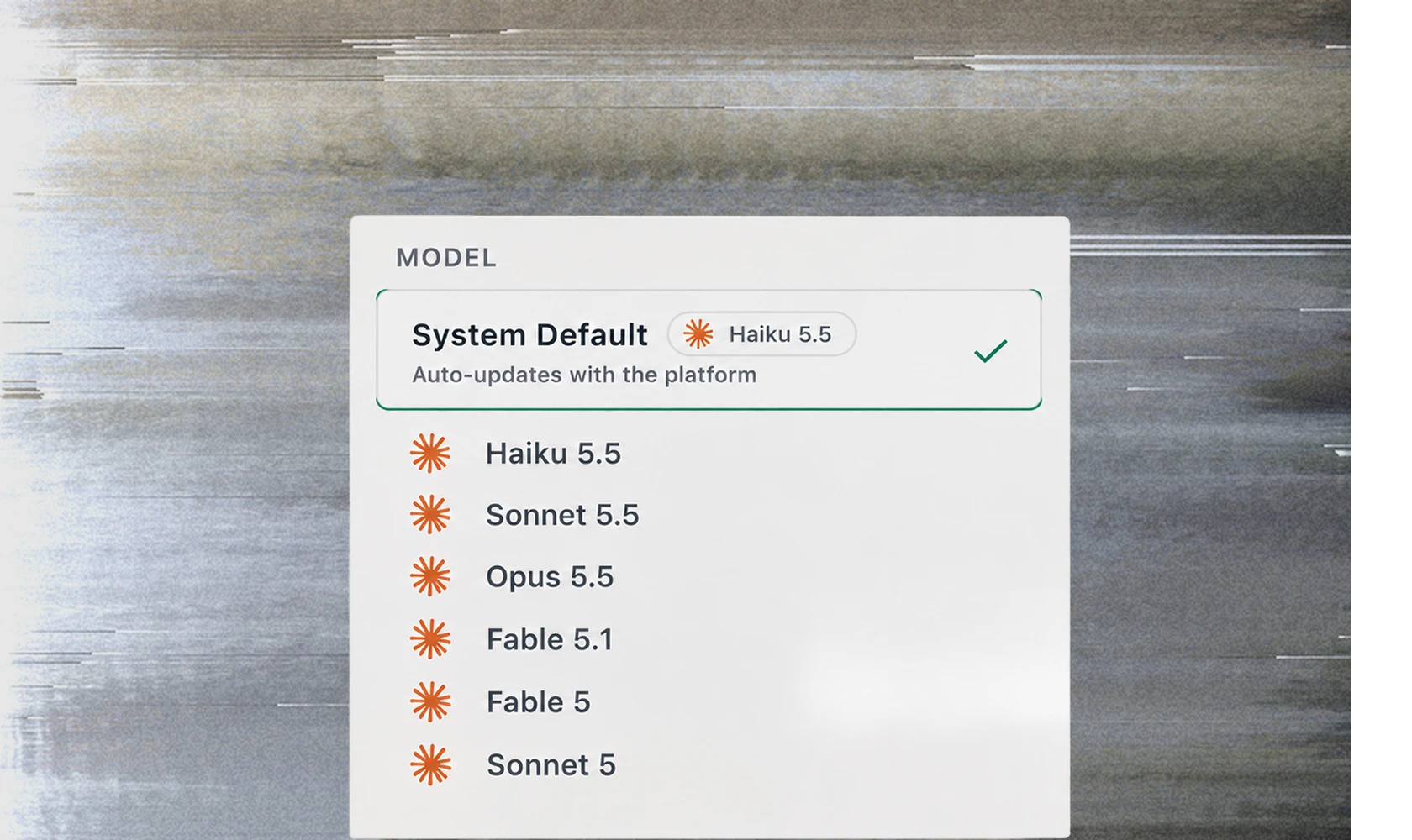
Claude Haiku 5.5: Cheaper Routine Data Work
At low effort, Haiku 5.5 more than doubles Haiku 4.5’s Decision-Bench score at less than half the cost. Higher effort still leaves a large gap with GPT-6.1 Sol.
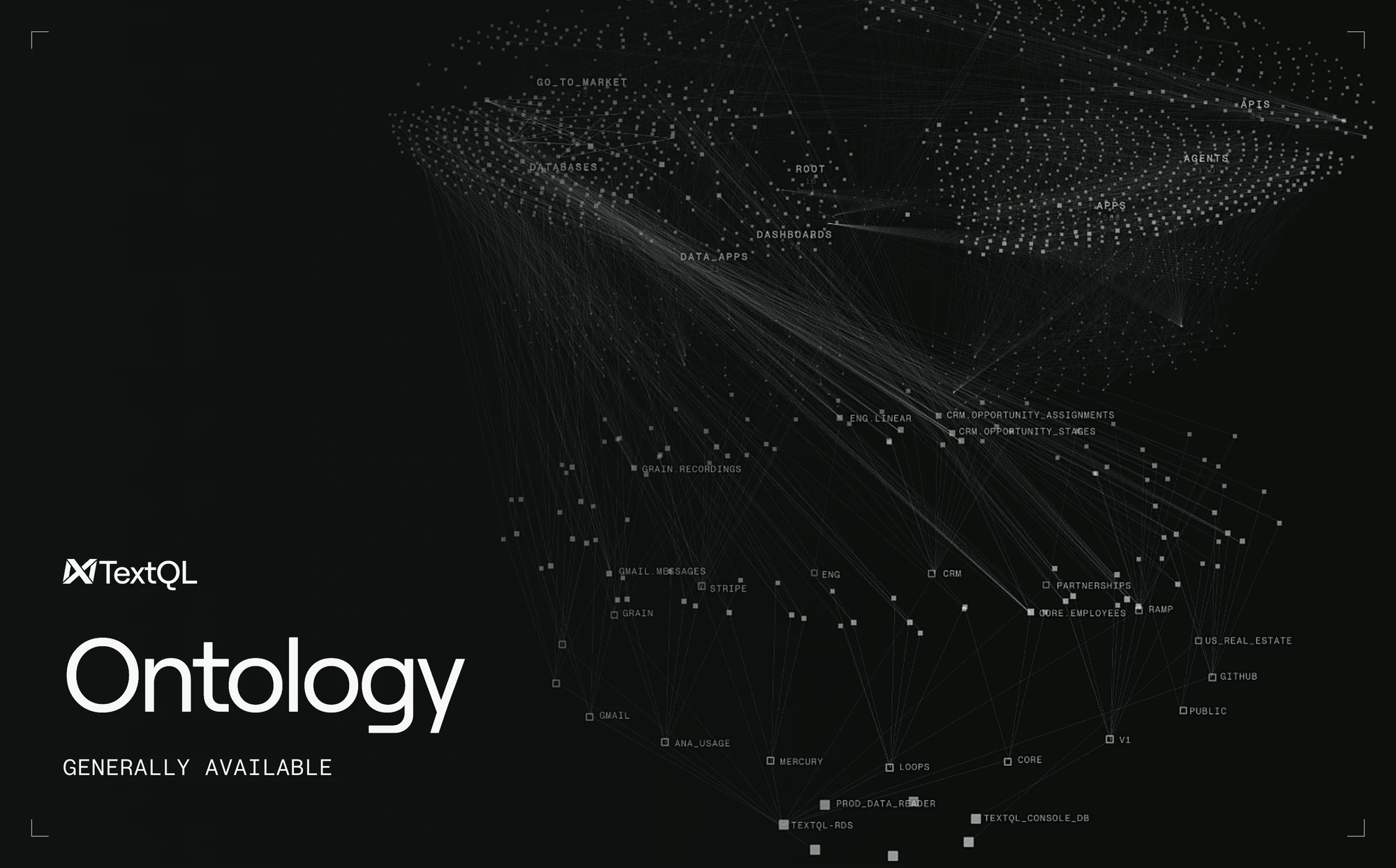
TextQL's Ontology is Now Generally Available
A file-system approach to consolidating business knowledge as code and giving agents a more direct path from questions to execution.