

How PAR Technology went from prototype to production-grade analytics with TextQL
PAR’s team validated the demand internally, then partnered with TextQL to ship production-grade embedded analytics to 140,000 restaurant locations.

60 min
from onboarding to insights
20+
use cases across PAR platforms
30+ mo
of engineering capacity redirected to core product
“Ana allows you to build reports and use them instantly. The fact that she removes the need to go through an engineering team, a product team, and a data analyst is huge.”
PAR Technology powers ordering and payment solutions for 140,000 restaurant locations across 110 countries. As the platform scaled, so did demand for embedded analytics — operators and internal teams alike needed instant visibility into order trends, menu performance, and revenue drivers across PAR’s product suite.
PAR’s engineering team spent 12 months building an internal analytics prototype that validated strong customer demand. But scaling it to production quality across PAR’s full product suite would have meant pulling engineers off core product work for years. VP of Product Jonathan Dawe recognized the opportunity to partner with a specialist instead — and brought in TextQL’s Ana. Pre-loaded with PAR’s own data environment and embedded directly into the PAR Ordering dashboard, Ana now powers 20+ analytics use cases and saves 480 hours of report generation annually.
PAR ECOSYSTEM
Point of Sale. Six capabilities.
Ana connects across every PAR capability — 140,000 locations, one semantic layer
FIG. 01 — THE PAR ECOSYSTEM, UNIFIED
A build-vs-buy decision at scale
PAR’s internal prototype proved the demand — but productionizing it across 20+ use cases and hundreds of restaurant brands was a different problem entirely.
INTERNAL ANALYTICS CHATBOT
12 months of engineering
FIG. 02 — BUILD VS. BUY
PAR’s engineering team built an internal analytics prototype that handled foundational use cases and confirmed strong demand from restaurant operators. But the scope kept growing — 20+ use cases spanning multiple platforms, each requiring deeper cross-system reasoning. Scaling the prototype to production quality would have meant dedicating engineering capacity that was needed on PAR’s core product roadmap.
The data environment reflected PAR’s growth through strategic acquisitions — hardware, payments, loyalty, ordering, and engagement cloud platforms each with their own mature data infrastructure. Delivering unified analytics meant reasoning across all of these systems simultaneously, a specialized problem that would require specialized tooling.
The internal prototype worked well for single-platform queries, but the highest-value questions — correlating order trends with loyalty engagement, tying menu performance to payment data — required cross-platform reasoning that’s a fundamentally different engineering challenge. PAR’s leadership saw the tradeoff clearly: continue investing engineering cycles into analytics infrastructure, or partner with a team that had already solved that problem.
“Some of the coolest experiences were seeing our customers’ eyes light up when they just asked a natural question in a chat prompt and getting a report or a dashboard built in real time, right before their eyes.”
AI-native analytics embedded where customers already work
TextQL built directly into PAR’s existing dashboard experience, turning their analytics prototype into a production-grade product feature.
TextQL’s Ana gave restaurant brands a white-labeled, embedded analytics layer that works across PAR’s multi-platform data environment: hardware, payments, loyalty, ordering, and engagement cloud platforms. PAR serves hundreds of restaurant brands from a shared data infrastructure, so Ana had to answer the right questions for the right people, with no data bleeding across brand boundaries.
Rather than forcing customers to learn new tools, navigate disconnected databases, or stand up separate data environments per customer, Ana unifies PAR’s varied data structures behind a single natural-language interface, with access automatically scoped to each operator’s context.
Secure by design. Scalable by default.
Most embedded analytics deployments solve the multi-tenant problem the hard way: separate databases, separate deployments, separate maintenance burdens for every customer. PAR couldn’t scale that way across hundreds of restaurant brands and 140,000 locations.
TextQL’s Role-Level Security changes the architecture. PAR’s data team uses Client Filter Rules in the Ontology to define exactly which fields, metrics, and data each user role can see. Those rules live in one place; Ana enforces them on every question, every generated report, every live dashboard, automatically.
A regional manager at one restaurant brand asks Ana about their top-performing menu items and gets an answer scoped to their data, no configuration required. Another operator at a competing brand asks the same question and gets their answer too, from their data only. Same deployment, completely isolated outputs.
The business impact runs in both directions. PAR’s customers get analytics they can actually trust, with no risk of accidentally surfacing a competitor’s order volumes or loyalty metrics. And PAR gets an analytics layer that scales without multiplying infrastructure costs. One deployment serves the entire customer base. New brands onboard into the same environment, inherit the access rules automatically, and start querying their data within the hour.
RLS turns a multi-tenant data problem into a product feature. PAR can open the full analytics surface to every operator because the access rules are already enforced at query depth.
ROW-LEVEL SECURITY
One table. Three tenants. Zero visibility across boundaries.
Item
Revenue
Orders
Burrito Bowl
$48.2K
3,210
Cheeseburger
$31.1K
2,840
FlipBurger
$27.5K
1,920
Chicken Burr.
$36.8K
2,450
Cajun Fries
$24.3K
3,100
Crinkle Fries
$18.9K
2,210
Guac & Chips
$28.1K
1,870
Bacon Dog
$15.4K
1,320
Chicken Shack
$22.1K
1,640
Client Filter Rules
FIG. 03 — ROLE-LEVEL SECURITY: ROW-LEVEL DATA ISOLATION (illustrative)
-
Embedded in the existing dashboard
Ana lives inside PAR Ordering’s dashboard. No new tool to learn, no separate login. Restaurant operators get analytics where they already work.
-
Cross-platform data unification
Ana reasons across PAR’s diverse data platforms and structures, delivering unified answers regardless of which system the data lives in.
-
Role-Level Security at query depth
Client Filter Rules in the Ontology enforce data boundaries on every interaction. One deployment, hundreds of brands, zero data bleed.
-
White-labeled for PAR’s customers
The experience is branded as PAR’s own. Restaurant operators interact with analytics that feel native to the platform they already trust.
-
60 minutes from onboarding to insights
New restaurant brands go from first login to their first analytics query in under an hour. Access rules apply automatically. There’s nothing to configure.
The setup was a connector flow. PAR’s data team pointed Ana at their existing data environment, defined the access rules in the Ontology once, and Ana was in production in days. No data left PAR’s environment. The existing tools still worked the day Ana went live. They just started answering questions — and only the right ones.
app.textql.com
Amigo Cantina Downtown
Top menu items by loyalty engagement?
Cajun Grill #42
Drive-thru vs dine-in revenue this quarter?
Amigo Cantina Downtown — Analytics
Live$48.2K
Top Item Revenue
3.2x
Loyalty Lift
3,210
Orders (Top SKU)
Menu Performance x Loyalty Lift
Nashville Hot
3.2x
Spicy Deluxe
2.8x
Classic Burger
2.3x
Grilled Wrap
1.5x
Revenue by Location
| Location | Orders | Rev. | Trend |
|---|---|---|---|
| Downtown | 3,210 | $48.2K | +12% |
| Midtown | 2,840 | $41.7K | +8% |
| Airport | 1,920 | $36.1K | +22% |
| Suburbs | 1,650 | $28.9K | +5% |
FIG. 04 — EMBEDDED ANALYTICS ACROSS PAR PLATFORMS (illustrative)
Engineering hours back on the product roadmap
With Ana embedded natively in the PAR dashboard, restaurant brands operating tens of thousands of locations and processing billions of monthly transactions can interrogate their data directly, without an analyst queue, tickets, or wait times.
The engineering team that had been maintaining the analytics prototype shifted back to core product development. The analytics function became a product feature rather than an internal infrastructure project.
On-demand reporting across complex data
Ana works across PAR’s full suite of data platforms and structures, delivering unified answers regardless of which system the data lives in. Customers get insights from loyalty, ordering, payments, and in-store operations in a single interface.
Real-time dashboard creation
What previously required coordinated work across disparate tools and teams now happens live — customers build functioning dashboards from a conversational prompt, on the spot.
A shift from answering questions to asking better ones
The scope of what PAR’s customers can ask expanded overnight. With the friction of data access removed, operators moved from reactive reporting to exploratory analysis, surfacing questions they never thought were possible to ask.
The expansion from the initial deployment into broader use cases happened organically. Once restaurant operators saw what Ana could do with ordering data, they started asking about loyalty, payments, and engagement metrics. The 20+ use cases weren’t planned — they emerged from operators discovering what questions were suddenly possible to ask.
PAR made the shift from treating embedded analytics as an internal engineering project to treating it as a product feature powered by a specialist partner. What would have taken years to productionize in-house was live in days.
“I think everyone immediately saw that this was going to be something that would be a powerful tool that would open up our customers’ imagination to spend time thinking — what are the questions I’m not asking?”
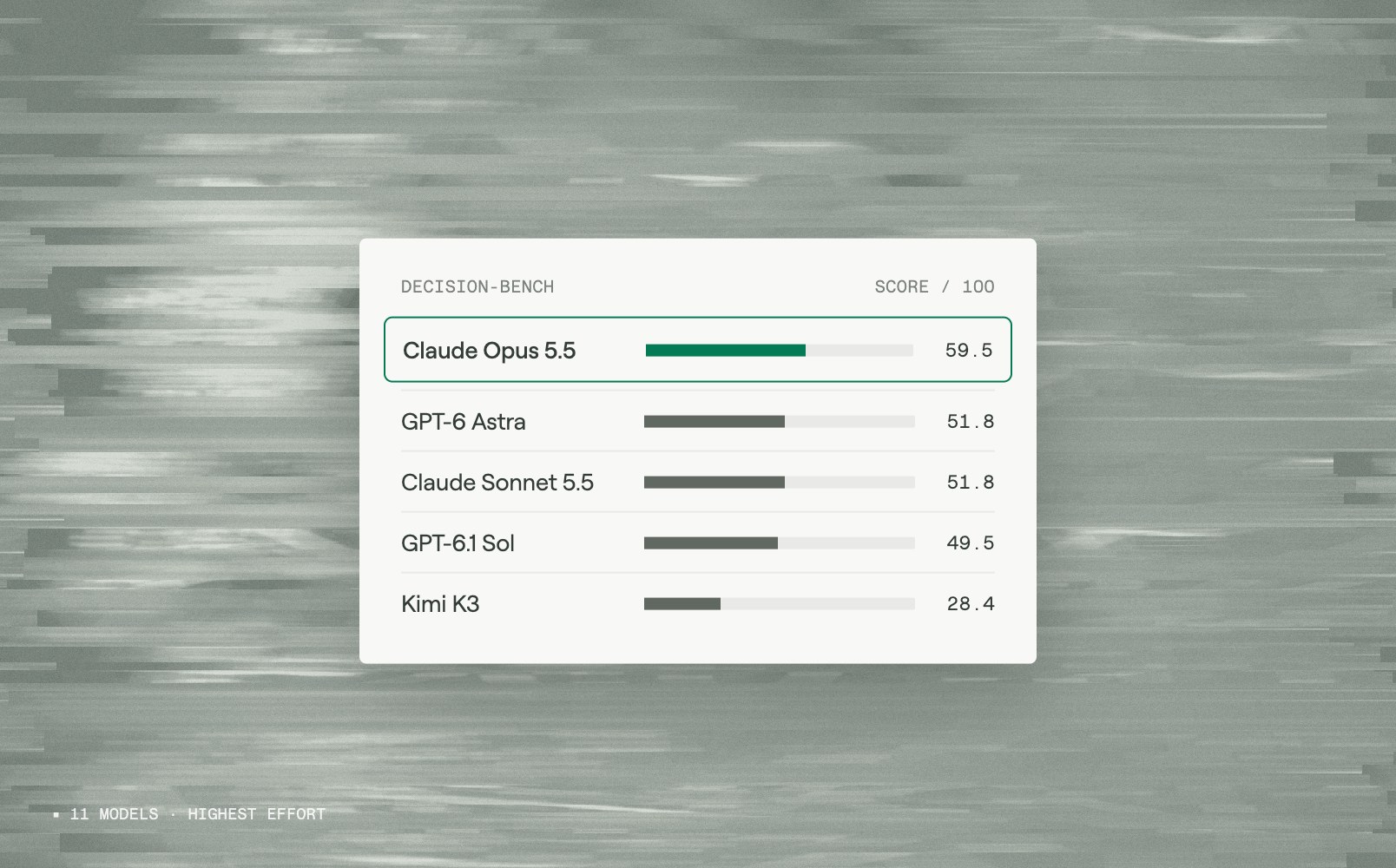
Decision-Bench: A Frontier Benchmark for Enterprise Decisions
The first evaluation framework for decision-making in complex enterprise environments, measured in dollars.
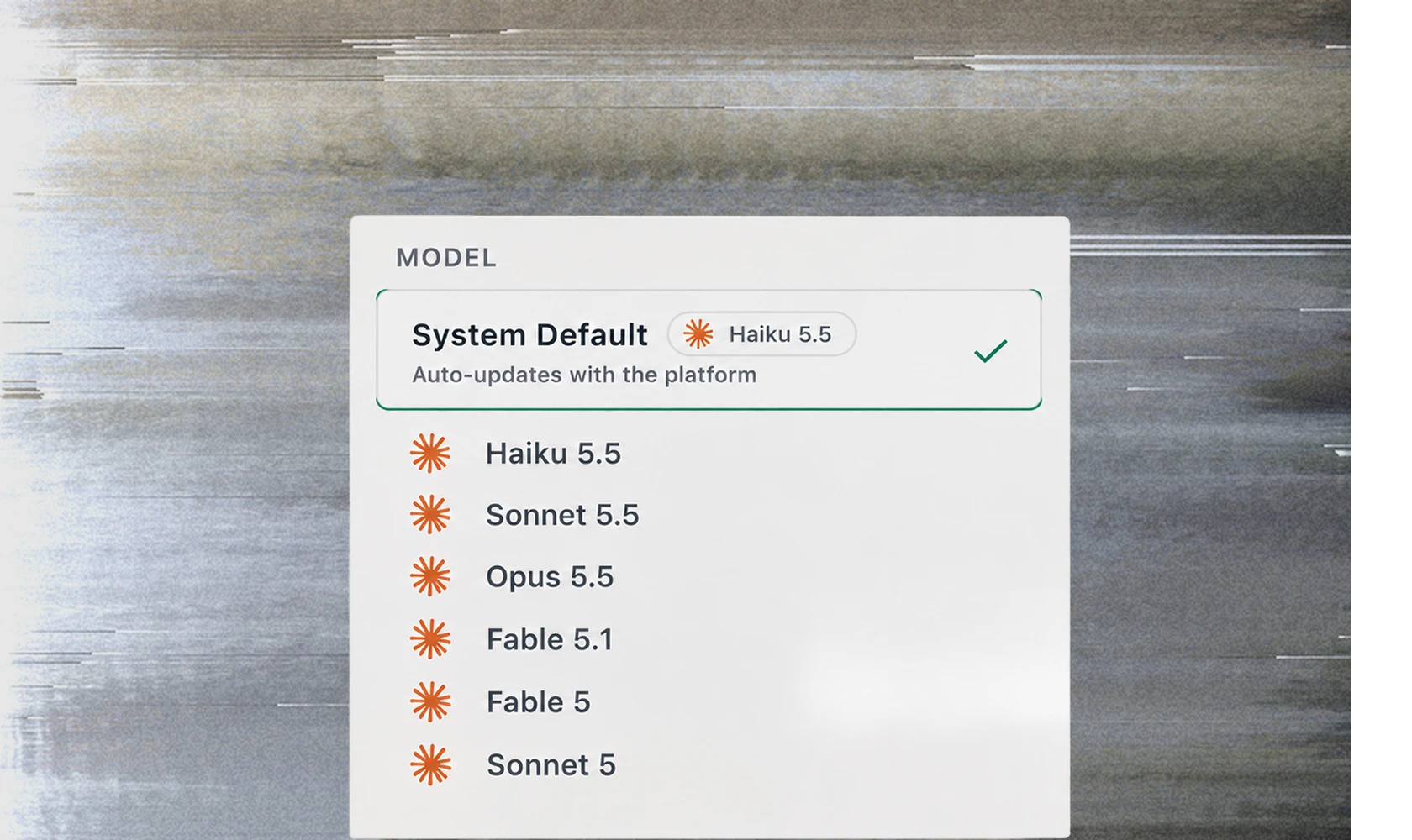
Claude Haiku 5.5: Cheaper Routine Data Work
At low effort, Haiku 5.5 more than doubles Haiku 4.5’s Decision-Bench score at less than half the cost. Higher effort still leaves a large gap with GPT-6.1 Sol.
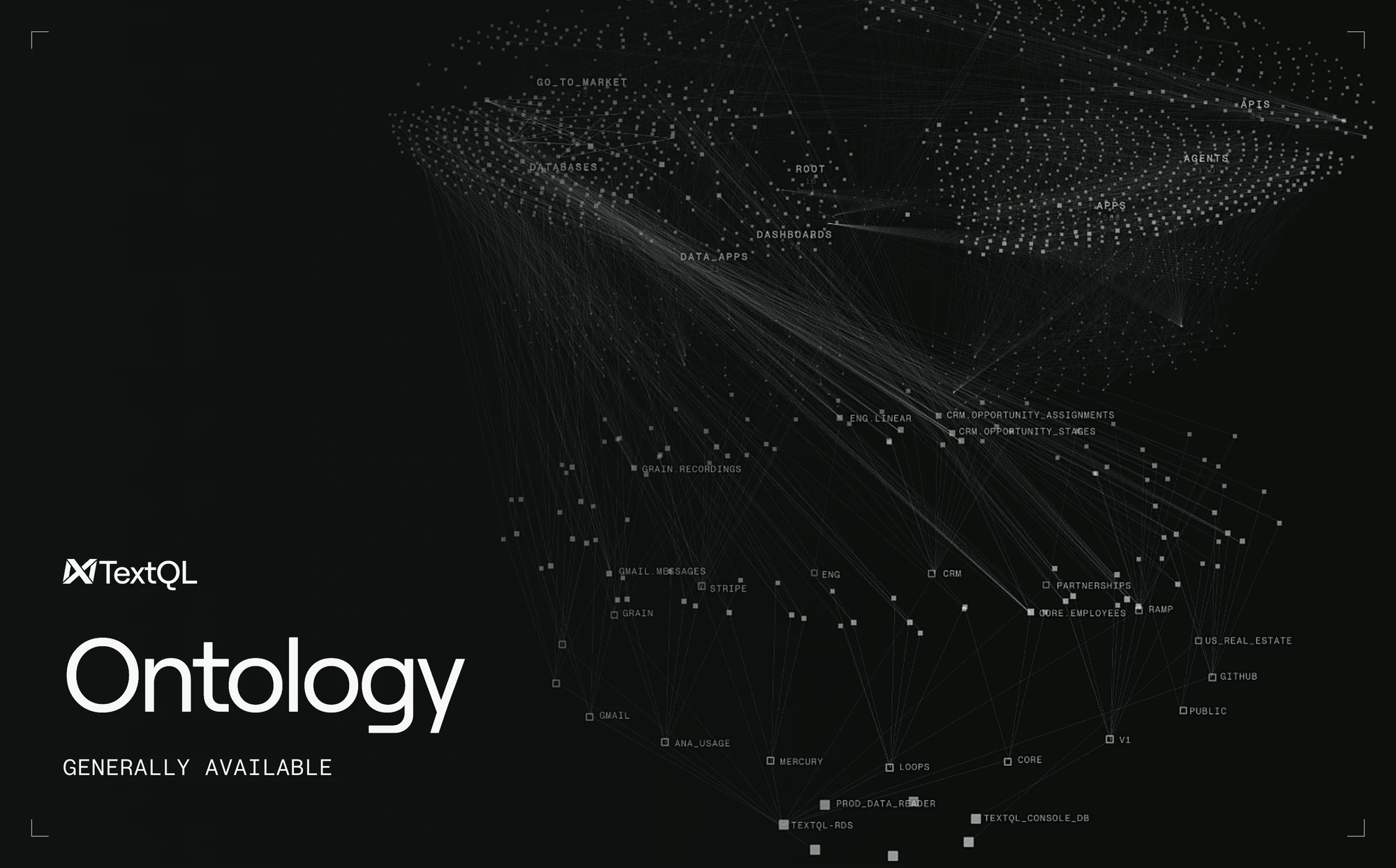
TextQL's Ontology is Now Generally Available
A file-system approach to consolidating business knowledge as code and giving agents a more direct path from questions to execution.